Warning Signs: How to Tell if Your Tree Won’t Survive a Hurricane – Spotting weak or dangerous trees before a storm.
March 14, 2025
March 14, 2025
Visual Inspection of the Tree Leaning – A sudden lean or worsening tilt can indicate root damage or instability. Cracks & Splits – Large vertical cracks, deep splits, or hollow areas can signal weakness. Dead or Dying Branches – If 50% or more of the tree’s canopy is dead, removal may be necessary. Cavities or Decay – Hollow sections in the trunk or branches weaken structural integrity. Mushrooms or Fungi at the Base – Often a sign of internal decay or root rot. 2. Root System Health Exposed or Damaged Roots – Construction, erosion, or disease can weaken roots. Mushroom Growth Around the Base – Could indicate root rot. Soil Lifting or Cracks Near the Base – A sign that roots may not be stable. 3. Trunk and Bark Condition Missing Bark (Canker or Sunscald) – Dead patches can weaken the tree. Deep Cracks or Splits – Structural weakness may lead to failure in strong winds. Hollow Trunk – If more than 30% of the trunk is hollow, the tree may not be safe. 4. Canopy and Branch Strength Deadwood in the Canopy – Dead branches can fall unexpectedly, especially in storms. Co-dominant Trunks (Multiple Stems) – V-shaped trunks are weaker than a single strong trunk. Heavy Limbs Overhanging the House – Could cause severe damage if they break. 5. Response to Wind & Weather Previous Storm Damage – A tree that has already suffered breakage is more vulnerable. Weak Unions or Cracks in Major Branches – Can lead to breakage during high winds. Tree Species – Some trees (like oaks and pines) are more susceptible to wind damage. 6. Professional Evaluation If you notice any red flags, a certified arborist can perform a more detailed evaluation using:
1. Visual Inspection of the Tree
Leaning – A sudden lean or worsening tilt can indicate root damage or instability.
Cracks & Splits – Large vertical cracks, deep splits, or hollow areas can signal weakness.
Dead or Dying Branches – If 50% or more of the tree’s canopy is dead, removal may be necessary.
Cavities or Decay – Hollow sections in the trunk or branches weaken structural integrity.
Mushrooms or Fungi at the Base – Often a sign of internal decay or root rot.
2. Root System Health
Exposed or Damaged Roots – Construction, erosion, or disease can weaken roots.
Mushroom Growth Around the Base – Could indicate root rot.
Soil Lifting or Cracks Near the Base – A sign that roots may not be stable.
3. Trunk and Bark Condition
Missing Bark (Canker or Sunscald) – Dead patches can weaken the tree.
Deep Cracks or Splits – Structural weakness may lead to failure in strong winds.
Hollow Trunk – If more than 30% of the trunk is hollow, the tree may not be safe.
4. Canopy and Branch Strength
Deadwood in the Canopy – Dead branches can fall unexpectedly, especially in storms.
Co-dominant Trunks (Multiple Stems) – V-shaped trunks are weaker than a single strong trunk.
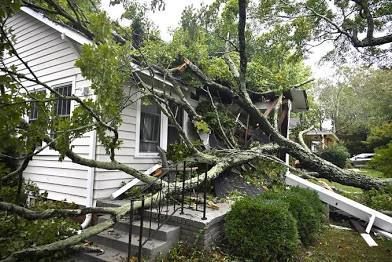
Heavy Limbs Overhanging the House – Could cause severe damage if they break.
5. Response to Wind & Weather
Previous Storm Damage – A tree that has already suffered breakage is more vulnerable.
Weak Unions or Cracks in Major Branches – Can lead to breakage during high winds.
Tree Species – Some trees (like oaks and pines) are more susceptible to wind damage.
6. Professional Evaluation
If you notice any red flags, a certified arborist can perform a more detailed evaluation using: