September 24, 2026
Removing large or hazardous trees near residential structures and electrical infrastructure requires strict safety protocols to prevent catastrophic property damage or severe injury. Professional tree felling operations in high-risk zones demand meticulous planning, specialized machinery, and trained personnel who understand complex physics and rigging techniques.
Property owners must ensure their chosen contractors adhere to rigorous industry standards, secure proper insurance coverage, and maintain constant communication throughout the project. Understanding the essential precautions expert arborists utilize allows homeowners to evaluate contractor competency effectively, ensuring that dangerous trees are removed safely, efficiently, and without compromising the integrity of nearby utilities or homes.
Evaluating Risk Levels Through Comprehensive Site Surveys
Before starting any cutting operations, qualified arborists conduct thorough site evaluations to identify potential hazards surrounding the target area. Experienced crews analyze trunk lean, structural decay, wind direction, soil stability, and proximity to overhead utility wires before deciding how to approach a job.
According to the World Resources Institute, tree cover loss has been rising in recent history, from 13.4 Mha of tree cover loss in 2001 to 25.5 Mha in 2025. Assessing these environmental dynamics helps contractors choose between direct directional dropping or controlled sectioning, ensuring that every maneuver accounts for surrounding infrastructure and reduces unexpected movement during removal.
Establishing Work Zones Through Clear Boundary Markers
Securing the perimeter around an active work site represents a critical safety measure that protects bystanders, vehicles, and neighboring properties. Professional tree felling contractors set up drop zones marked with bright traffic cones, high-visibility warning tape, and clear signage to prevent unauthorized entrance.
Crew members establish dedicated drop zones calculated at twice the total height of the target tree to manage falling limbs safely. Assigning trained ground workers as flaggers ensures that pedestrians and vehicle traffic remain at a safe distance while heavy limbs are lowered, eliminating accidental intrusions into high-hazard areas during active removal operations.
Coordinating Power Shutoffs Through Utility Companies
Working within close proximity to high-voltage overhead cables demands formal coordination with local power providers to prevent lethal electrical shock. Qualified arborists contact utility operators to de-energize lines or install protective line covers before initiating tree felling near live wires. Specialized utility-line clearance arborists receive specific certifications to handle branches near energized conductors safely.
Establishing clear protocol with electrical suppliers prevents dangerous arc flashes, widespread power outages, and equipment damage, ensuring that ground crews and aerial workers remain completely protected from hidden electrical hazards throughout the entire duration of the cutting process.
Securing Structural Branches Through Advanced Rigging Techniques
When space constraints prevent a tree from falling freely, arborists use advanced rigging systems to lower heavy wood sections sequentially. Professional tree felling strategies rely on high-strength arborist ropes, friction brakes, pulleys, and heavy-duty carabiners to control each piece as it is cut. Technicians carefully calculate branch weight and fall trajectories, directing lowered material away from rooflines, fences, and power lines.
Controlled rigging prevents heavy logs from impacting the ground with full force, protecting buried utility pipes, lawn surfaces, and nearby residential structures from vibration damage or unexpected structural impacts during removal.
Operating Heavy Machinery Through Trained Aerial Crews
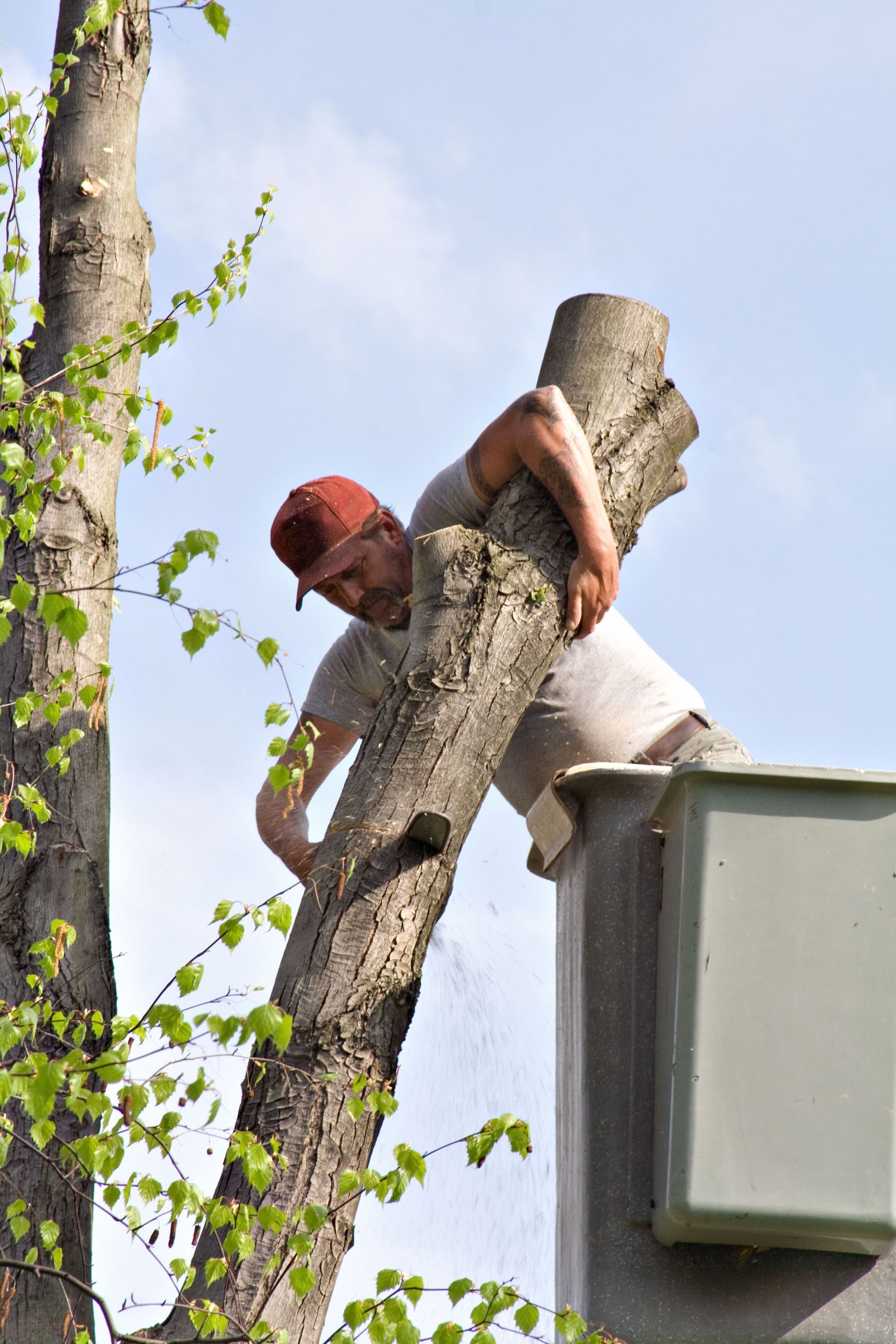
Utilizing modern machinery like bucket trucks, cranes, and mechanized grapple saws allows contractors to dismantle dangerous trees with surgical precision. Expert arborists employ specialized aerial platforms to reach upper canopy branches safely without placing unnecessary weight on compromised trunks.
During complex tree felling projects, crane operators hold giant trunk sections securely in place while arborists execute precise cuts, lifting heavy timber cleanly away from surrounding homes. Utilizing heavy machinery minimizes physical fatigue for workers, reduces reliance on manual climbing in decayed trees, and speeds up complex removals while maintaining total control over every section.
Equipping Ground Workers Through Standardized Protective Gear
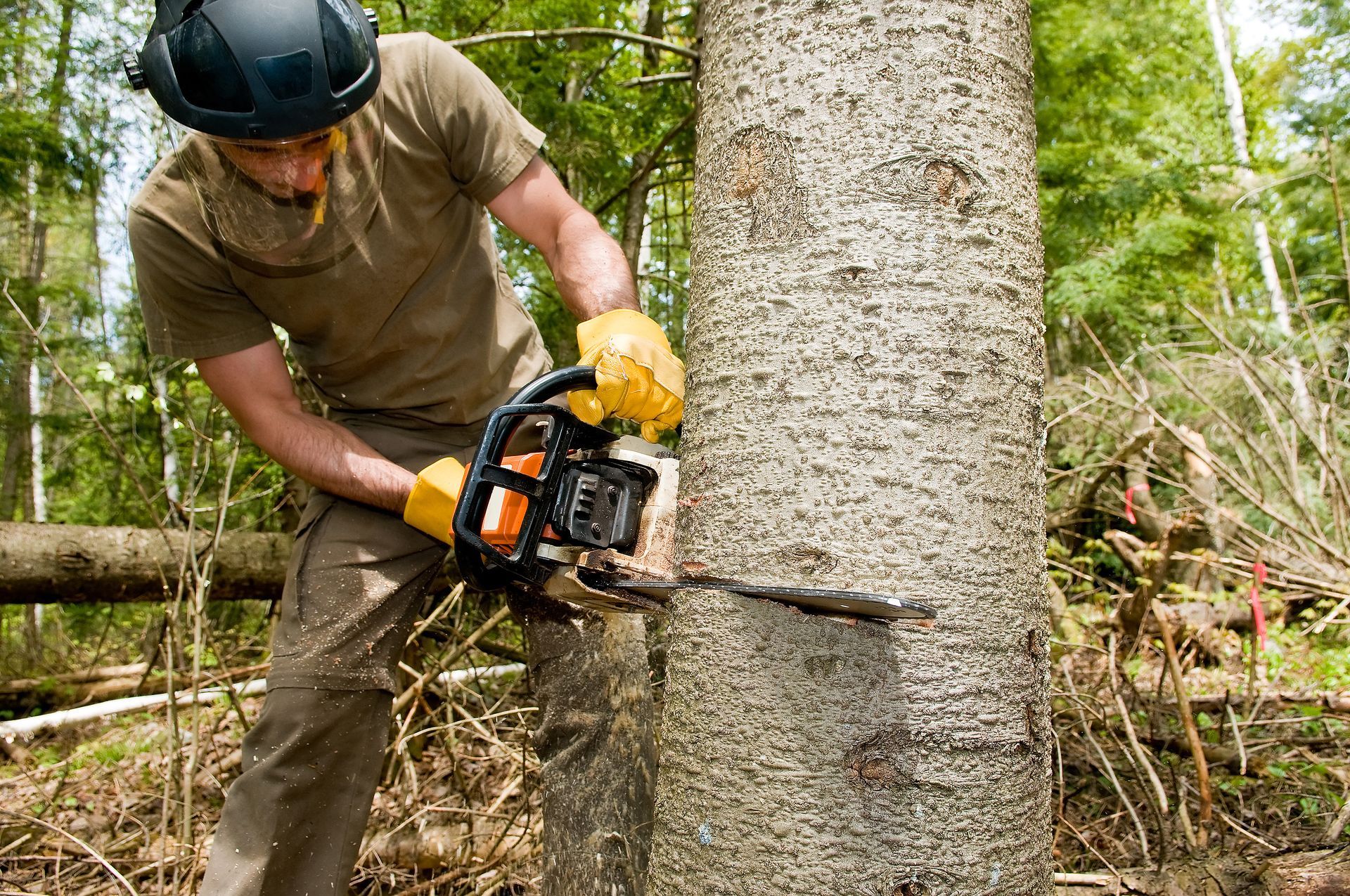
Personal protective equipment serves as the primary line of defense against flying debris, falling branches, and sharp cutting machinery. Qualified contractors ensure that all ground crew members wear heavy-duty helmets, eye protection, noise-canceling ear protection, steel-toed boots, and chainsaw-resistant chaps. Adhering to strict safety standards prevents severe occupational injuries during intense tree felling procedures.
Crews maintain continuous radio communication through specialized helmet headsets, allowing workers to coordinate movement seamlessly over loud engine noise. Providing comprehensive protective gear reflects a contractor's operational standards and ensures that safety remains the top priority on site.
Applying Controlled Cuts Through Strategic Notch Mechanics
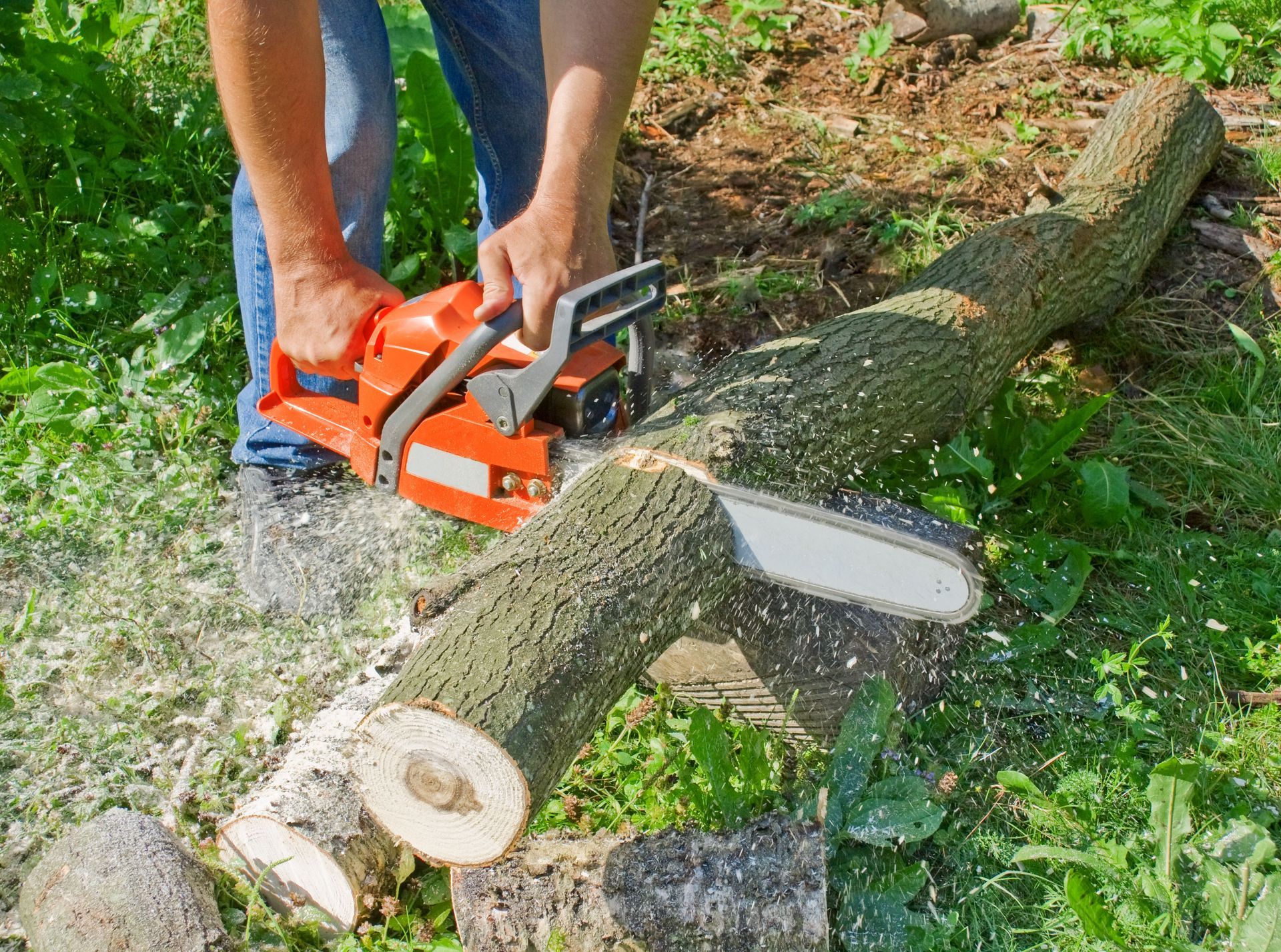
Executing precise chainsaw cuts determines the exact path and speed at which a tree or branch falls during removal. Skilled professionals utilize traditional directional cutting techniques, such as open-face notches and hinge wood preservation, to guide timber safely to the ground. Proper notch mechanics prevent dangerous trunk splitting, back-barber chairing, or erratic twisting while the tree leaves its base.
During technical tree felling procedures, arborists leave precise amounts of hinge wood to control the drop until the piece lands safely, ensuring complete predictability and keeping the falling mass well clear of nearby structures.
Managing Unpredictable Weather Shifts Through Constant Vigilance
Environmental conditions like gusty winds, sudden rain, or ice accumulation dramatically increase the hazards associated with heavy timber removal. Professional contractors monitor real-time weather forecasts continuously and pause operations immediately if wind speeds exceed safe working limits. Wind gusts can sway large canopy branches unexpectedly, driving timber into overhead utility cables or residential roofs despite careful rigging.
Professional teams prioritize safety over speed, rescheduling delicate cuts when adverse weather threatens worker stability or control, ensuring that every phase of the project proceeds under optimal, predictable, and fully controlled environmental conditions.
Clearing Fallen Debris Through Systemized Ground Operations
Once major timber sections reach the ground safely, ground crews must process and clear debris systematically to keep work areas organized. Efficient tree felling operations utilize high-capacity wood chippers, log loaders, and sweepers to keep pedestrian paths and driveways completely free of hazardous brush.
Processing branches immediately prevents tripping hazards for workers carrying heavy machinery and maintains clear exit routes if emergency evacuations become necessary. Thorough site cleanup protects property aesthetics, prevents lawn damage from heavy lingering logs, and ensures that the home exterior is left clean, safe, and fully accessible to residents.
Inspecting Remaining Stumps Through Comprehensive Final Audits
The removal process concludes with a thorough inspection of the stump, surrounding soil, and nearby structures to verify project safety. Contractors assess whether stump grinding is necessary to eliminate trip hazards or prevent unwanted root regrowth near home foundations and underground utilities.
Arborists review the site alongside property owners, verifying that all power lines remain intact and no secondary structural damage occurred during removal. Performing detailed final walkthroughs confirms that all contractual requirements were fulfilled professionally, leaving the property secure, clear of dangerous hazards, and completely free of potential environmental risks.
Choosing Qualified Arborists Through Methodical Contractor Selection
Selecting a qualified, insured, and experienced tree service provider is the ultimate step in securing your home and property. Reputable contractors carry comprehensive general liability coverage and workers' compensation insurance to shield homeowners from financial risk during hazardous removal operations.
Verifying professional credentials, such as ISA certification and compliance with local municipal safety codes, assures property owners that technicians follow rigorous industry standards. Investing in certified professionals provides absolute confidence that technical removals near power lines and residential homes will be executed safely, protecting your family, neighbors, and valuable real estate investment for years to come.
Are you seeking assistance with the trees on your property in Bakersville, Newland, Banner Elk, Boone, Blowing Rock, and Burnsville, NC? Affordable Tree Care is here to assist! Contact us today to request a service estimate.